


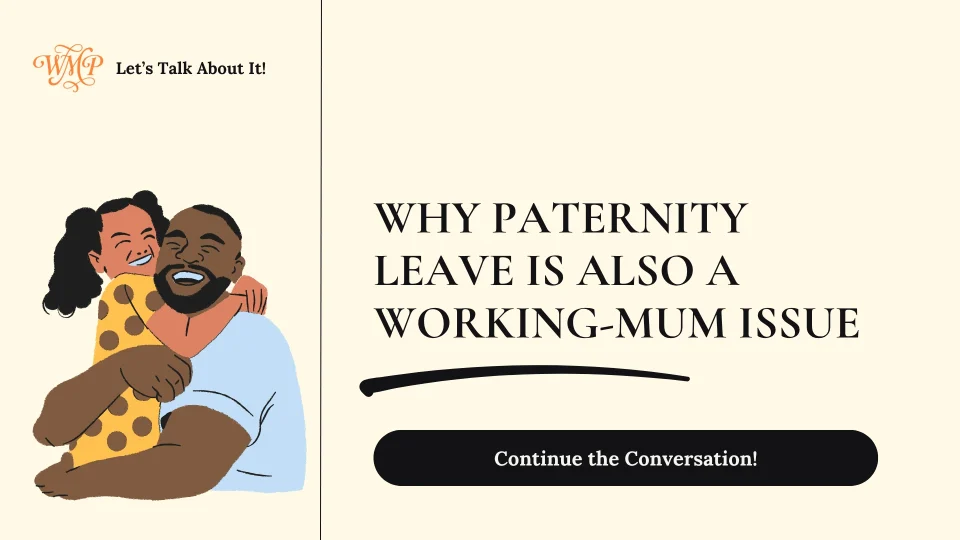
When a Nigerian father bathes the children, takes them to school or prepares dinner, it is not unusual to hear someone say, “Ah, you’re lucky. Your husband really helps you.”
The comment is usually well-intentioned, and sometimes the Mum herself may say the same thing. But it raises an interesting question: if both people are parents, why do we describe one person’s contribution as parenting and the other’s as helping?
This is part of what makes the conversation about shared parenting worth having. Shared parenting is not simply about a father doing more around the house occasionally. It is about both parents recognising that raising their children and keeping family life moving are responsibilities they share.
A recent public conversation in Nigeria called for childcare and household responsibilities to be shared more deliberately, particularly as many mothers now combine paid work or business with raising a family. It is an important conversation because a home can look well-supported from the outside while one person is still carrying most of the visible and invisible work that keeps it running.
This does not mean every task has to be divided perfectly in half. Families have different work schedules, finances, strengths, children and support systems. There may even be seasons when one parent genuinely needs to do more than the other. Shared parenting is less about keeping score and more about both parents taking responsibility for the life they are building together.
Shared Parenting Begins With Ownership, Not Occasional Help
Imagine that it is bath time. Mum notices the toddler needs a bath, finds the towel, brings out clean clothes, gets the soap and reminds Dad that it is getting late. Dad eventually gives the bath. He completed the visible task, but Mum was still the person responsible for noticing, planning and making sure it happened.
That is the difference between helping with a task and owning a responsibility.
Ownership means one parent does not always have to notice what needs to be done, prepare everything and then tell the other person what to do. If Dad owns the school run, for example, it may mean more than simply driving the children to school.
He may also need to know what time they should leave, whether today is Colour Day, whether homework needs to be submitted, whether the water bottle is in the bag and whether the class teacher sent something important to the WhatsApp group the night before.
These details may sound small, but much of parenting is made up of exactly these small things. Someone remembers the vaccination date, notices that the cereal is almost finished, plans what the toddler will eat tomorrow, keeps track of school holidays, realises the wipes are running low and remembers that a child has outgrown their sandals.
None of these responsibilities looks enormous on its own. Put hundreds of them together across a week, however, and they become a significant part of the work of raising a family. Shared parenting means that this work does not automatically have to live in one parent’s head.
What Can Shared Parenting Look Like in Everyday Life?
There is no single formula that will work for every family. What feels fair in a home where both parents work similar hours may look very different in a family where one parent travels frequently, works night shifts or has a more flexible schedule.
The goal is not necessarily to divide every task equally, but to make sure both parents understand what needs to be done and have a dependable way of sharing responsibility for it.
Night Waking and Early Mornings
Anyone who has lived with a baby knows how exhausting repeated night waking can be. If Mum is breastfeeding, she may naturally handle more of the feeds, but that does not necessarily mean every part of nighttime parenting has to become her responsibility. Her partner might bring the baby to her, handle nappy changes, settle the baby afterwards or take over early in the morning so she can get another hour of sleep.
With an older child, parents may be able to alternate nights or find another arrangement that works around their schedules. Fairness will not always look identical every night. What matters is that one parent’s need for sleep is not automatically treated as more important than the other’s.
School, Crèche and Everything Around Them
Taking a child to school is only the visible part of the school run. Behind it may be a parent who remembered that it was Colour Day, found the yellow T-shirt, signed the homework, packed the lunch and read the message in the class WhatsApp group saying the children needed cardboard and crayons the next morning.
There are school fees, meetings, uniforms that suddenly no longer fit, supplies that need replacing and those mornings when a child wakes up sick just as both parents have somewhere important to be.
Shared parenting can mean dividing ownership of some of these responsibilities rather than allowing one parent to become the default manager of everything related to the children.
The same applies to medical care. It helps when both parents know important information about their child’s health rather than one person being the only keeper of vaccination dates, medication details, clinic appointments and the doctor’s instructions.
Meals and All the Thinking That Happens Before Dinner
Cooking is easy to see because there is eventually a plate of food on the table. The work that happens before the food appears is easier to overlook. Someone has probably thought about what the family will eat, checked what is available, remembered that the eggs finished yesterday, considered what the toddler will actually eat and figured out when somebody will get to the market or supermarket.
This is why sharing responsibility for meals can involve more than taking turns at the cooker. The planning, shopping and remembering are part of the work too.
Many Nigerian families also have support from nannies, housekeepers or relatives, and that support can make an enormous difference. Even then, there is usually someone coordinating the arrangement.
Someone needs to know what should be cooked, what needs to be bought, when the nanny is off, whether she has been paid and what Grandma needs to know before the children spend the weekend with her. Outside help can reduce the workload, but managing that help is itself another responsibility that does not automatically have to belong to one person.
Discipline, Play and Emotional Care
There is also a part of parenting that cannot be neatly divided on a chore chart. It is noticing that your child has been unusually quiet, listening to the long story they desperately want to tell, comforting them when they are frightened, knowing what makes them anxious and creating time to play with them.
Providing financially is an important part of caring for a family, but children also need relationships with both parents. Shared parenting gives both parents an opportunity to know their children beyond school fees, discipline and the practical responsibilities of raising them.
It can also help when parents have conversations about boundaries and discipline rather than allowing one person to become the permanent disciplinarian. In many homes, “Wait until your daddy comes home” is a familiar sentence.
But when both parents are actively involved in setting boundaries and guiding their children, one parent does not always have to carry the responsibility of correction while the other appears mainly when things have become serious.
What if One Parent Works Longer Hours?
This is where the conversation about shared parenting needs some nuance because families are not spreadsheets. There will be seasons when one parent simply has more capacity than the other. Dad may leave home very early and return late.
Mum may have just started a demanding new job. One parent may travel frequently, someone may be building a business, or there may be a newborn in the house who has temporarily changed everyone’s routine.
During those seasons, one person may genuinely do more, and that does not necessarily mean the arrangement is unfair. Fair does not always mean equal.
A more useful question may be whether one person automatically carries whatever the other person does not have time to do. A parent who returns home late may not be able to handle the afternoon school run, but perhaps they can prepare school items for the next morning, take responsibility for bedtime when they are home, handle Saturday activities or completely own another recurring family responsibility.
The exact arrangement will look different from one home to another. What matters is that it is discussed, appreciated and adjusted when circumstances change. Otherwise, something that began as a temporary arrangement during a particularly demanding season can quietly become the permanent default.
Grandparents, Nannies and the Nigerian Support System
For many Nigerian families, raising children has never been the responsibility of only two people. Grandma may come over. A sister may stay for a few weeks after the baby arrives. There may be a nanny, housekeeper or crèche. A neighbour may occasionally help with pickup. That support can be invaluable, especially when both parents work.
Shared parenting does not mean rejecting that village and trying to do everything alone. It does mean that outside support should support the parents rather than quietly replace one parent’s involvement.
Both parents can remain informed about who cares for their children, how that care is going and what needs attention. Where there is paid help, both parents can also participate in decisions about that arrangement rather than leaving one person to recruit, instruct, monitor, pay and solve every problem connected to the person helping the family.
Maybe the First Step Is Simply Seeing the Work
For couples who want to share parenting more deliberately, a useful first step may be to look at everything it actually takes to keep their home and children cared for during a normal week. The list should include obvious responsibilities such as cooking, cleaning, school runs and bath time, but it should also include the work behind those tasks: remembering, planning, booking, checking, buying, preparing and following up.
Then, instead of asking, “Who sometimes helps with this?” it may be more useful to ask, “Who carries the responsibility for making sure this happens?”
That question can reveal a lot.
A couple may discover that one person is doing fewer visible tasks but carrying most of the planning. They may realise that one parent needs to completely own a few recurring responsibilities. They may even discover that their current arrangement works quite well, but some of the invisible work simply needs to be recognised and appreciated.
The arrangement does not have to remain the same forever either. A new baby, job change, move, school transition or loss of childcare support can change what each parent is able to carry. Shared parenting also means being willing to revisit the arrangement when family life changes.
Children Notice What Responsibility Looks Like
There is another reason this conversation matters: our children are watching.
A boy who regularly sees his father cook, comfort, clean, remember and care is learning something about what fatherhood and family responsibility look like. A girl who grows up seeing her mother’s work, career, time and rest treated as valuable is learning something too. Children absorb these ideas long before anyone sits them down to explain what partnership should look like.
No family will share every responsibility perfectly. There will be busy weeks, forgotten school projects, arguments about whose turn it was and seasons when one person carries more. There will also be days when everybody is simply trying to make it to bedtime.
Shared parenting is not about keeping score. It is about recognising that raising a family creates a lot of visible and invisible work, and making sure one person is not automatically responsible for whatever nobody else thought about.
Perhaps that is what sharing the responsibility really looks like: Mum does not have to carry the whole family in her head, Dad is not treated like a visitor in his children’s everyday lives, and both parents can look at the family they are raising and honestly say, “We’re doing this together.”
Editorial Note and Sources
This article was inspired by the recent Nigerian public conversation on shared parenting.
Sources:
Peoples Gazette, “Expert urges shared parenting to ease pressure on working mothers” (29 August 2026).
UN Women, “What is unpaid care work and how does it power the economy?” (23 October 2025).




join the conversation